History Timeline
Victorian
1837–1901-
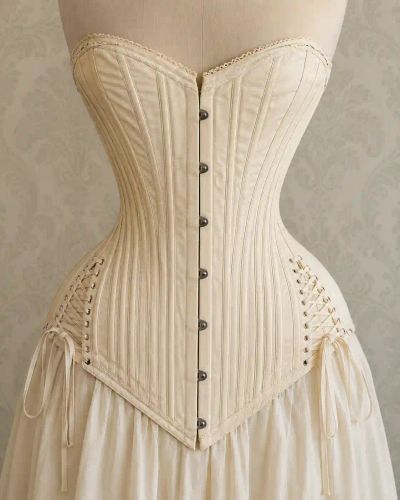 Victorian Corsetry
Structured, boned undergarments that shaped the Victorian silhouette and underpinned nearly every outer garment of the era.

Edwardian
1901–1914-
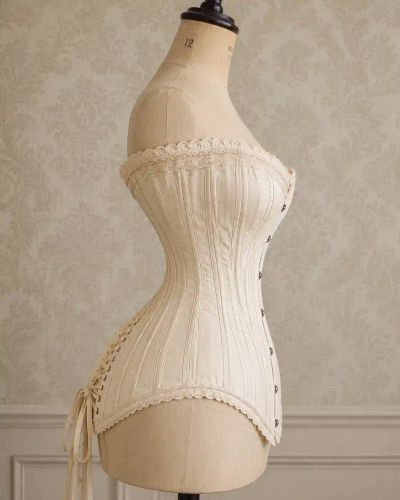 Edwardian Era
The early-1900s silhouette built around the S-bend corset, pushing the bust forward and hips back for a distinctive curved profile.

1920s
1920–1929-
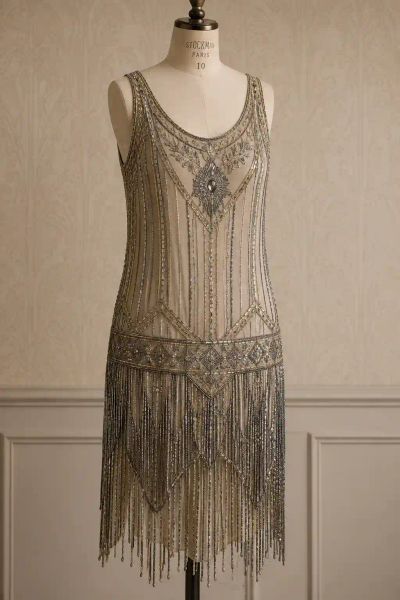 1920s Flapper Silhouette
The dropped-waist, boyish silhouette that defined 1920s Western fashion, a sharp break from corseted Edwardian dress.

1930s
1930–1939-
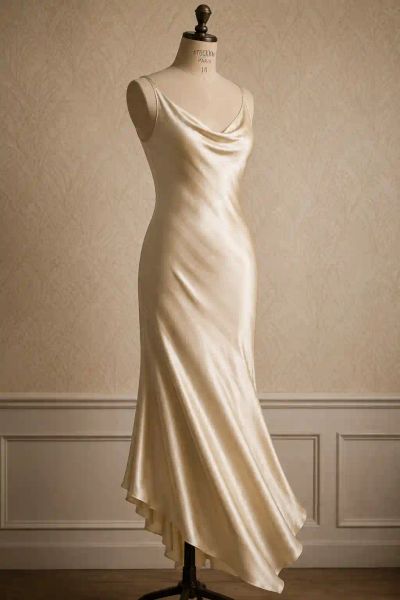 1930s Bias-Cut Silhouette
The bias cut's rise after the 1920s - fluid, body-skimming gowns cut on the diagonal, restoring a natural waist and curves after a decade of flat, dropped-waist dressing.

1940s
1940–1949-
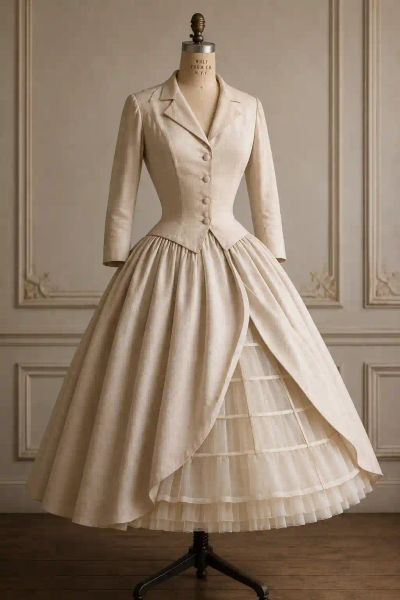 The New Look (1947)
Christian Dior's 1947 collection that revived a cinched waist and full skirt after years of wartime fabric rationing, reshaping postwar fashion.

1950s
1950–1959-
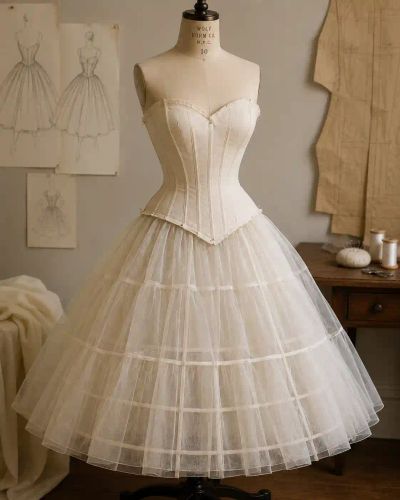 1950s Hourglass Silhouette
The nipped waist and full skirt of Dior's New Look carried through most of the decade, giving way by the late 1950s to Balenciaga's looser sheath and chemise shapes.

1960s
1960–1969-
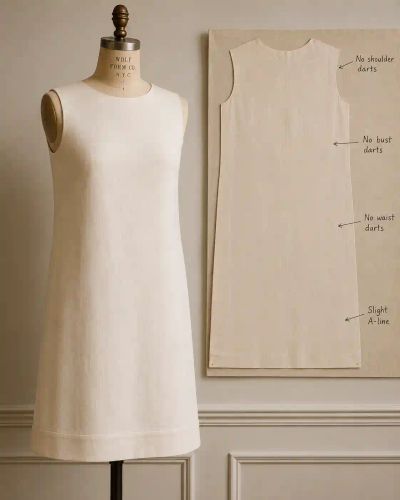 1960s Mod Silhouette
A decade that moved from lady-like fitted suits to the miniskirt, most often credited to Mary Quant, and the geometric, synthetic-fabric 'space age' looks of Cardin and Courreges.

1970s
1970–1979-
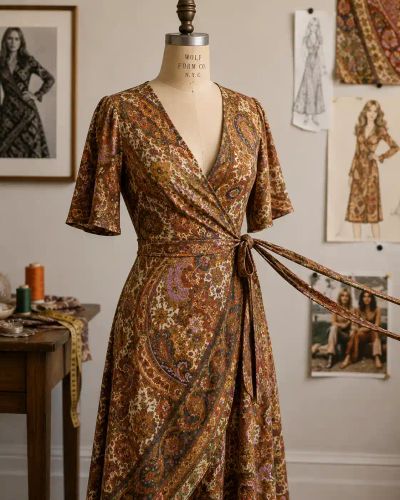 1970s Eclectic Silhouette
A decade with no single dominant shape - bohemian prairie dresses, Halston's disco-ready draping, Diane von Furstenberg's wrap dress, and punk's deconstruction all running at once.

1980s
1980–1989-
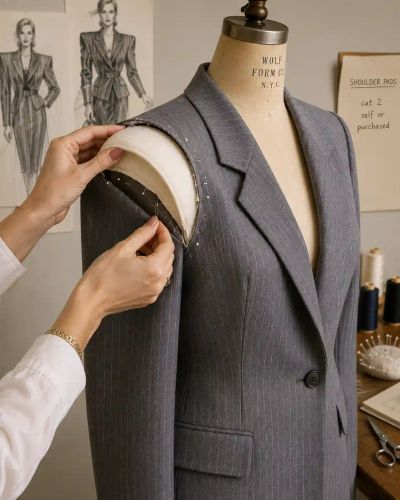 1980s Power Dressing
Padded shoulders and bold structure, and stretch Lycra worn as two different tools for the same goal - projecting authority as women moved into corporate workplaces in greater numbers.

1990s
1990–1999-
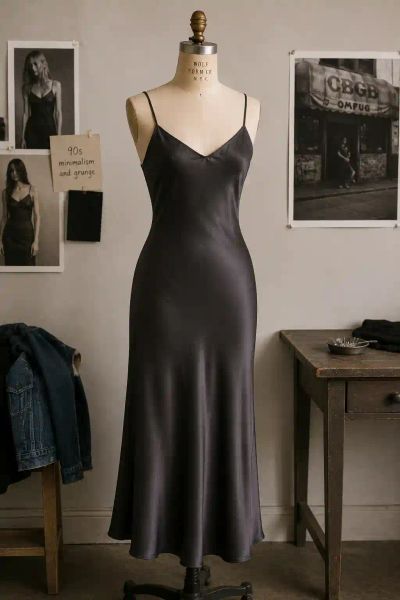 1990s Minimalism and Grunge
A decade split between Seattle-born grunge, reaching high fashion via Marc Jacobs, and the pared-back slip dresses and clean tailoring that came to define 1990s minimalism.

2000s
2000–2009-
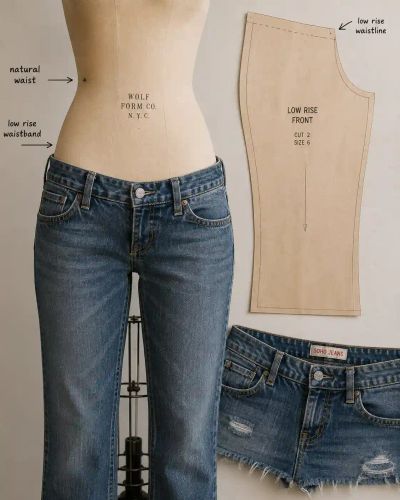 2000s: Low-Rise and Fast Fashion
Ultra-low-rise cuts, logo-driven pieces like the Juicy Couture tracksuit, and a fast fashion industry accelerating fast enough to put trends on shelves within weeks of the runway.

2010s
2010–2019-
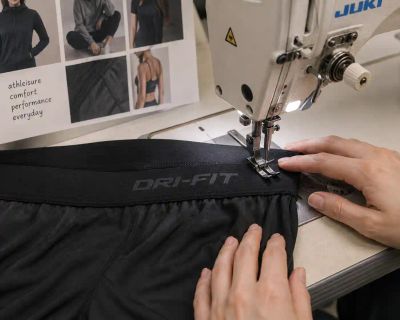 2010s Athleisure Silhouette
Luxury sportswear worn as everyday clothing, a normcore backlash against dressing to impress, and a trend cycle reshaped by Instagram and a fast fashion industry facing its first real reckoning.

2020s
2020–2029-
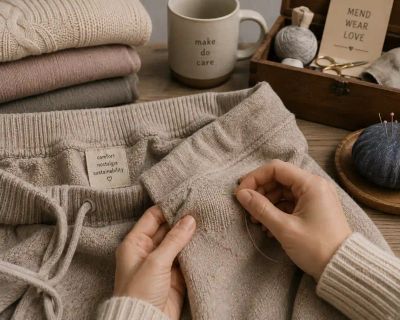 2020s: Comfort and Nostalgia
Pandemic-driven comfort dressing, a Y2K and late-1990s revival cycle running faster than ever, and a 'quiet luxury' pushback against logo-driven fashion - all amplified by social media microtrends.

Not tied to one era
Cross-era pieces that don't belong to a single point on the timeline above.
-
Evolution of Undergarments
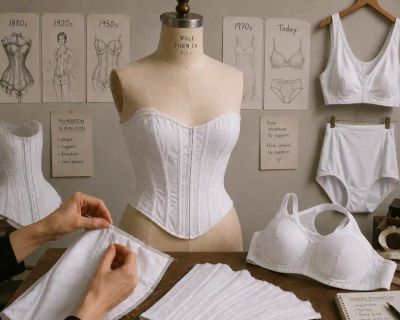
How the foundation layer under Western women's dress shifted from rigid, laced corsetry to soft, elasticated support across the 19th and 20th centuries.
-
Notable Figures
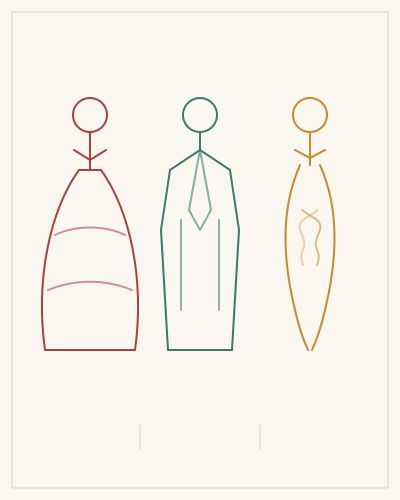
A handful of the people whose individual innovations reshaped Western dressmaking over the last two centuries - not a complete history, just where several threads on this site trace back to.
-
Tailoring vs. Dressmaking Traditions
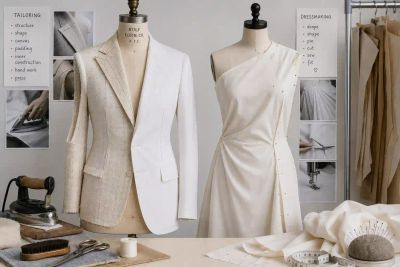
Two historically distinct Western garment-making trades - tailoring built around structured menswear, dressmaking around fitted womenswear - with different tools, techniques, and, for much of their history, different genders of practitioner.


